
From collab launches to consulate gardens, luxury brands are using the city as a canvas — and what they build reveals more than what they sell.
Walk through Shanghai right now and the city feels like a living brand activation calendar. On Anfu Road, a Timberland pop-up at Harmay draws a crowd around a shoe that has barely changed in fifty years. Just around the corner, Chanel has taken over a Wukang Road villa for its summer collection launch. At the Shanghai Exhibition Center, Hermes artisans are demonstrating techniques that take years to master to anyone who wants to watch. And in the garden of the Consulate General of Belgium in Shanghai Xuhui, a Brussels fabric house presented its new collection to a room of people who were specifically invited to be there.
The range is striking. Not just in scale, but in ambition and intent. And when you lay these activations side by side, they start to reveal something beyond seasonal marketing. They reveal how differently brands understand the relationship between experience, audience, and what luxury actually means in 2026.
The spectrum of activation
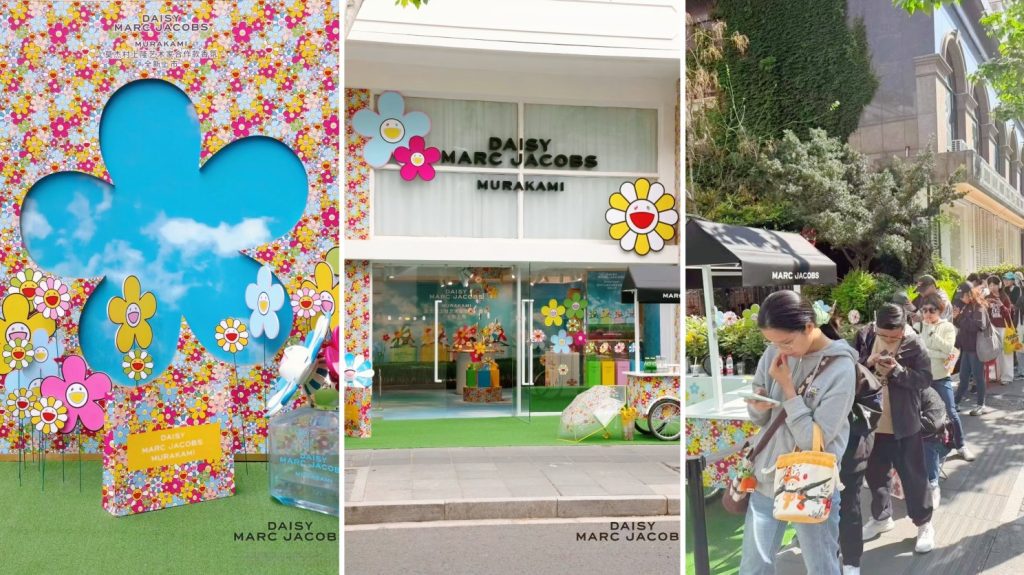
At one end sits the collab launch — experiential in format, culturally ambitious in framing. The Daisy by Marc Jacobs x Takashi Murakami installation is a strong example: joyful, oversized, designed for sharing, built around the creative collision between Marc Jacobs’ iconic fragrance universe and Murakami’s instantly recognisable floral visual language. It is honest about what it is, and it does it well. The queue is the metric, and the queue is long.
This is not European design traveling to China. This is Chinese designers who absorbed the Antwerp philosophy — its rigor, its conceptual depth, its independence from trend cycles — and are now bringing it back to their home market. On their own terms. With their own voice.
That is a genuinely new kind of exchange. And watching it happen at the Belgian Consulate, in a historic villa on one of Shanghai’s most atmospheric streets, gave the moment an almost symbolic weight.
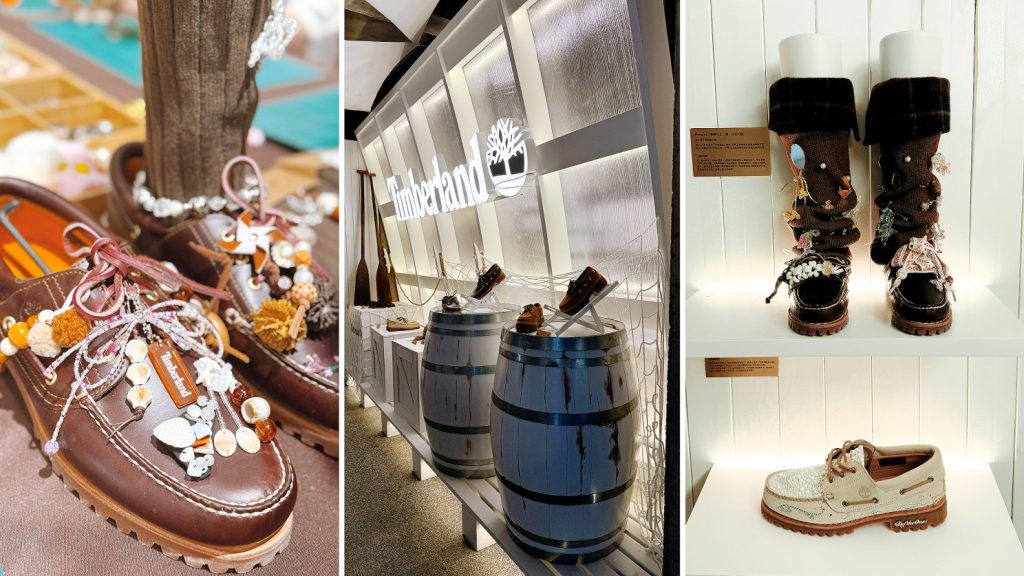
Not far away on Anfu Road, Timberland takes a different approach to the same basic challenge — how do you make a heritage product feel alive to a new audience? Rather than wrapping the classic boat shoe in a collab, the pop-up at Harmay shows how it can be restyled — sock covers, clip-on accessories, configurations that reflect a distinctly Chinese approach to personalisation — and invites visitors to sign up for workshops at Timberland retail stores to make these accessories themselves. The shoe itself barely changes. What changes is the relationship between the product and the person wearing it. Choosing Harmay as the host — one of Shanghai’s most culturally attuned retail spaces, steps from the luxury cluster on Wukang Road — is itself a signal about who Timberland wants in the conversation.
What each model signals
The distance between these activations is not simply a difference in budget or category. It is a difference in strategy — about strong recognizable brand identity and brand awareness, desired brand image and – most importantly – how it speaks to defined target audiences and how it sticks to their minds and hearts, about what those brands wants the audience to feel, and how long it expects that feeling to last”
A collab launch speaks to cultural desire. It creates a moment, generates content, positions the brand within a creative conversation larger than itself. A heritage-restyling pop-up speaks to belonging — it says: this product has a history, and you are now part of writing its next chapter. A collection launch in a carefully chosen architectural setting speaks to status and geography simultaneously, with Shanghai as primary stage rather than secondary market.
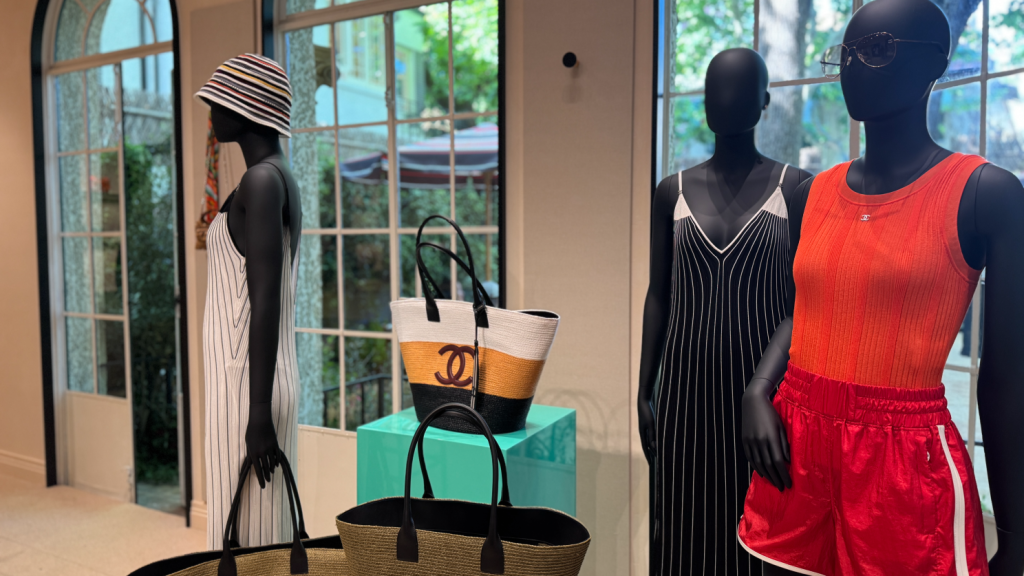
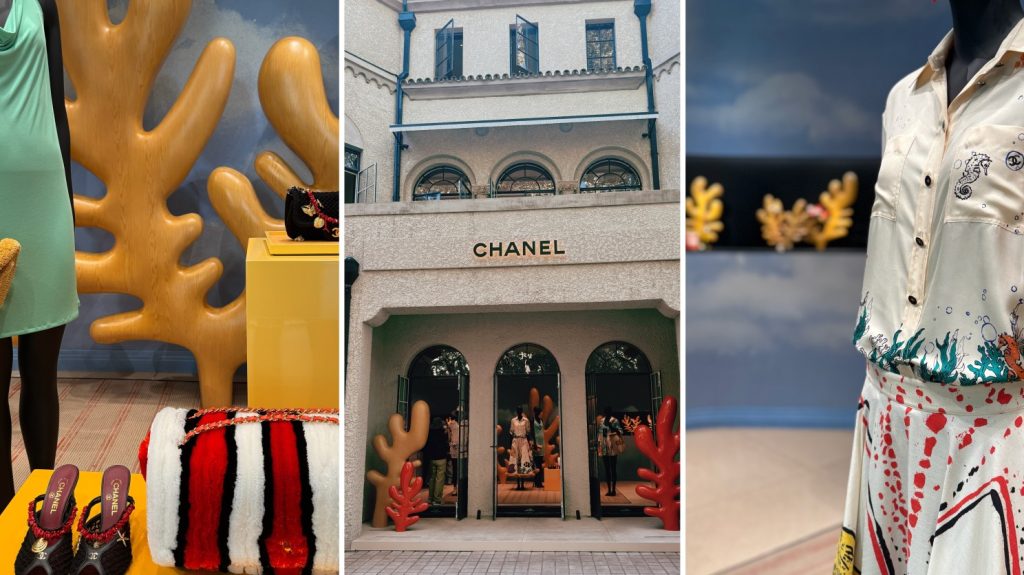
Chanel‘s summer collection launch on Wukang Road occupies this third register. A new collection unveiled here, in this city, in a space that the street’s growing reputation for luxury presence has made legible to the right audience, carries a message that goes beyond the garments themselves. It says: ” This is where our most important conversations are happening.
Hermes, then and now
Hermes offers perhaps the most instructive comparison of all — not with another brand, but with itself.
In late 2024, the house brought “Mystery at the Grooms'” to Shanghai: an elaborate immersive installation set within a fictional French estate where the caretakers of Hermes’ horses had mysteriously vanished. Guests moved through six richly designed rooms collecting clues on their phones, with Hermès products woven throughout as functional props. Narrative-driven, gamified, theatrical. The horse as mystery.
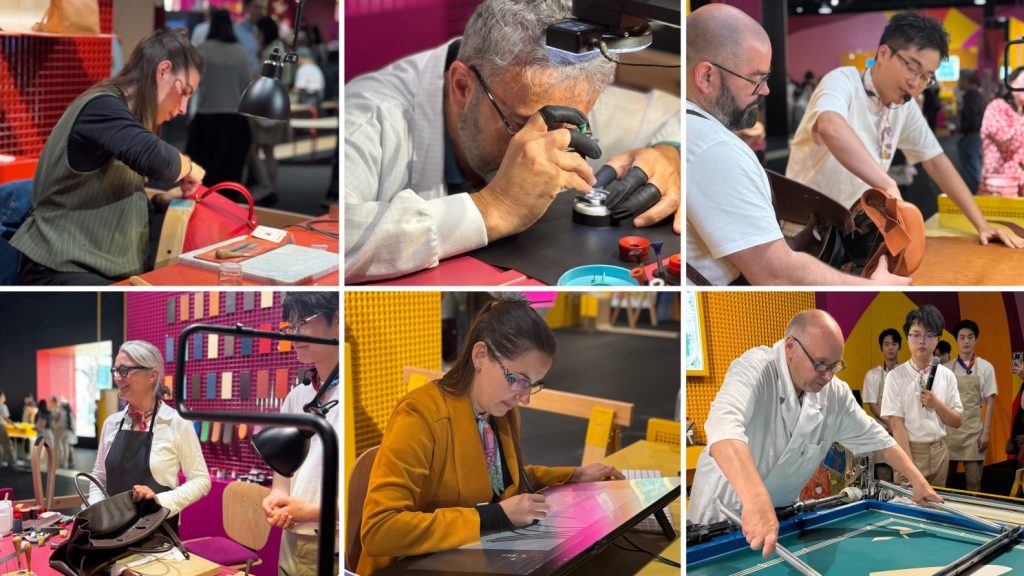
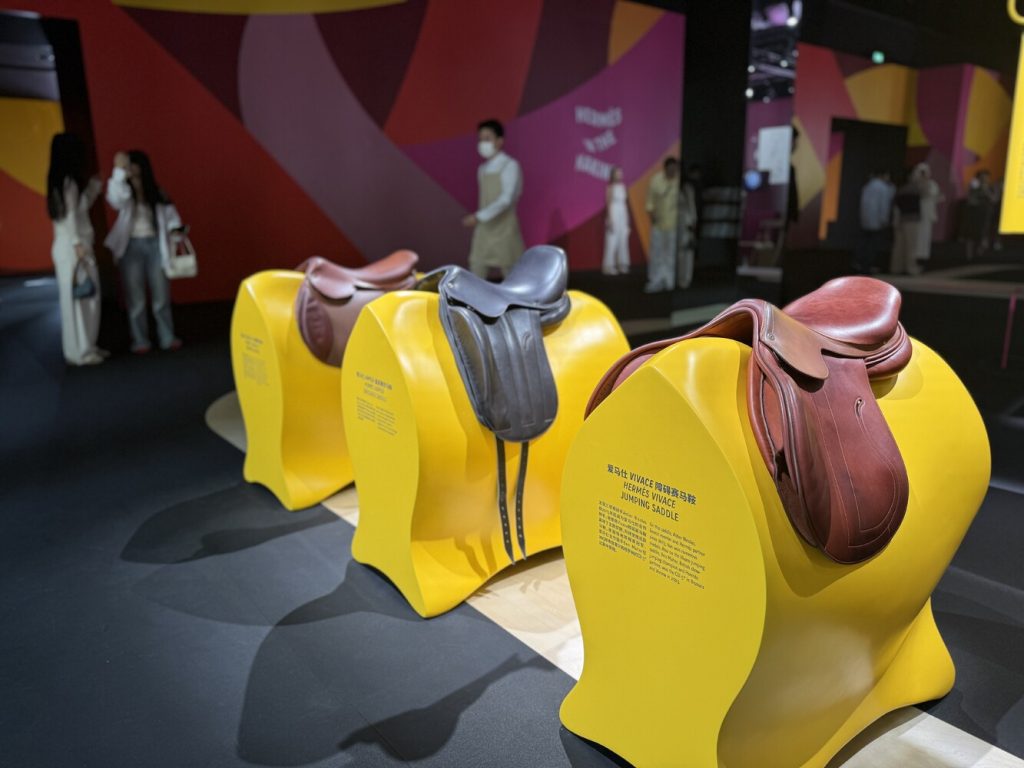
This year, “Hermes in the Making” arrived at the Shanghai Exhibition Center — craftspeople from nearly ten of the house’s métiers demonstrating their techniques live. Saddlers, leatherworkers, silk screen printers, porcelain painters. Free to attend. Children explicitly welcome at weekend sessions. The horse as origin.
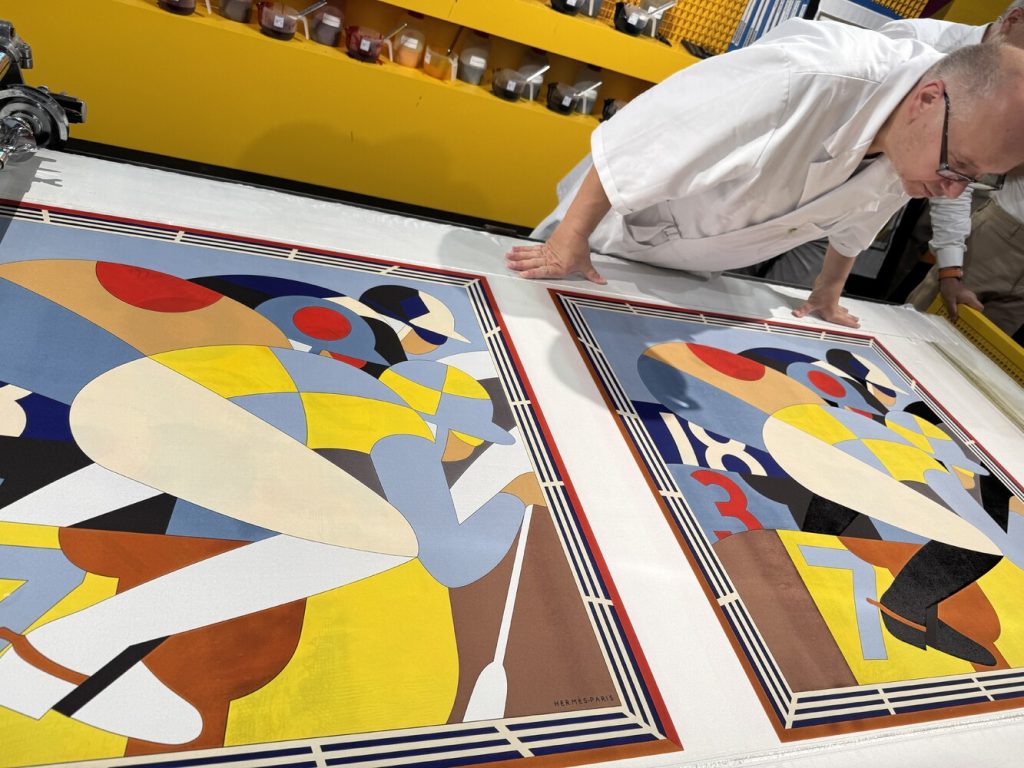
We paused at the silk screen printing station for almost an hour. The artisan explained that mastering the technique takes three years, two of them under direct tuition. The printing table — roughly the size of two of Hermes’ signature 90×90 scarves laid end to end — becomes the site of something unexpectedly absorbing: colour poured by hand, pace calibrated by feel, every decision made by a person rather than a process. You understand something about the house that no campaign could communicate.
Two experiences, two years apart, both rooted in the same equestrian heritage and both free to the public. But asking completely different things of their audience. One asks you to play. The other asks you to pay attention. Together they suggest a brand that is genuinely exploring what experience can do — not settling on a single answer.
The room that was worth being in
A few evenings before the Hermès exhibition closed, we attended a presentation of a very different register entirely — Scabal, the Brussels Luxury Fabric house — chose Shanghai, and specifically the garden off the Consulate General of Belgium in Shanghai Xuhui, as the site for the global launch of its collaboration with Chinese artist Ma Xinle.
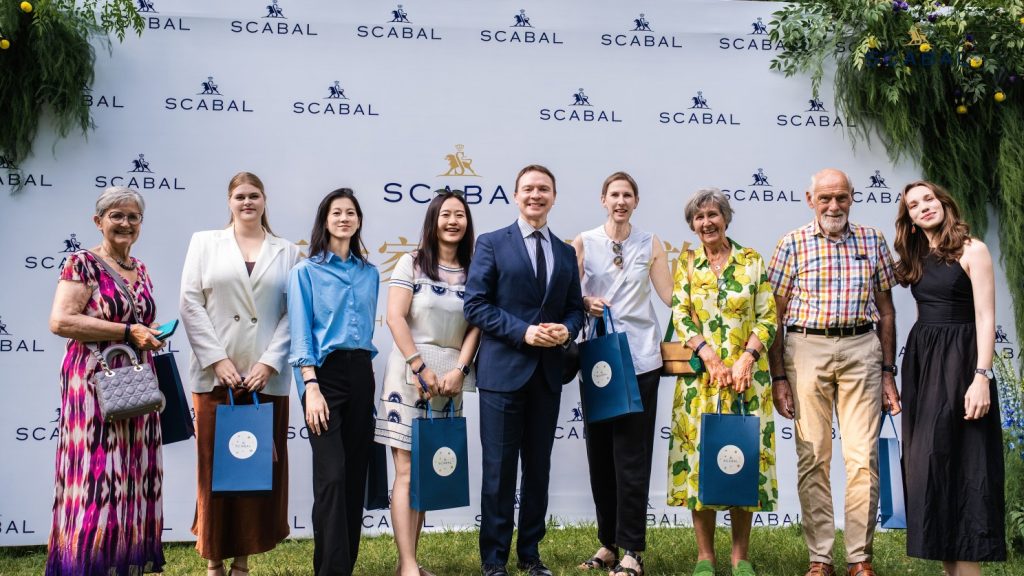
The setting matters. A consulate garden is not a neutral venue. It carries diplomatic and cultural weight that a hotel ballroom or brand showroom cannot replicate, and the choice to launch here — not in Brussels, not in London, but in Shanghai — said something deliberate about where Scabal believes its most meaningful conversations are happening.
Internationally acclaimed percussionist Yu Le performed live. Ma Xinle’s artwork — paintings of horses rendered into the linings of Scabal’s new fabrics — was the centrepiece of the collection presentation. It was a detail that landed differently having spent time that week watching Hermès artisans whose entire heritage is rooted in equestrian craft. Two European houses, centuries of tradition between them, both finding the horse as a symbol worth carrying forward into a new context. One in a public exhibition centre open to the city. One in a consulate garden, at a global launch, for an invited audience. The gesture is different. The seriousness is the same.
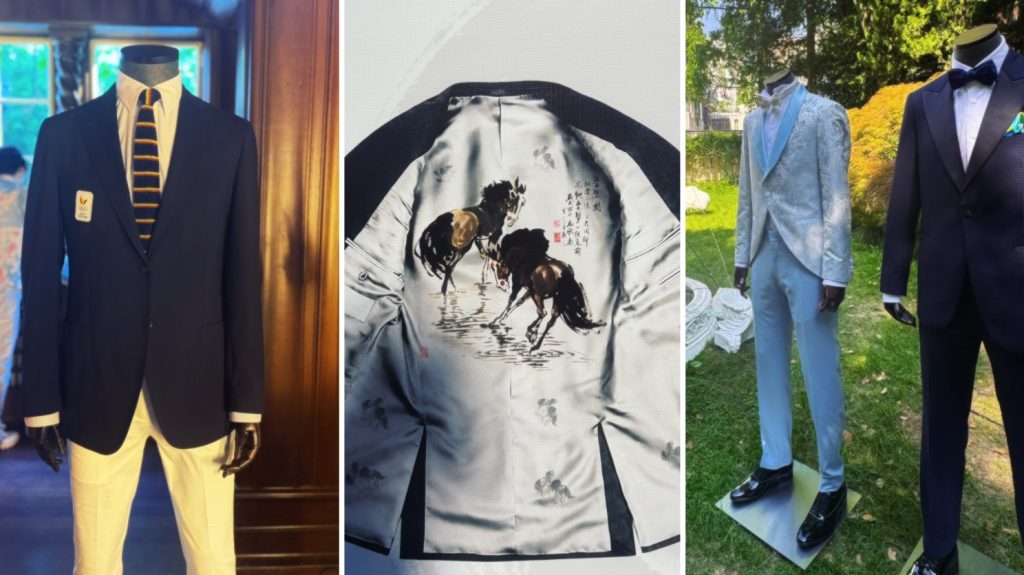
This is the end of the activation spectrum that rarely gets written about, because it is by definition not public. No queue, no photo booth, no WeChat campaign. A room of people who were invited, a collaboration that announced itself through art and live music, and a setting that gave the whole evening a gravity that money alone cannot purchase.
It is also, not coincidentally, how some of the most durable brand relationships in this market get started — not with visibility, but with the right people in the right room, paying attention.
What it means for European brands in China
Shanghai’s appetite for brand experience is well documented. What is perhaps less discussed is how quickly Chinese audiences have become sophisticated readers of these experiences — not just of what is on offer, but of what the offer reveals about intent.
A collab launch that wraps a product in cultural energy tells you the brand understands the conversation it wants to join. A heritage pop-up that invites localised restyling tells you the brand trusts its audience to co-author the next chapter. A craft exhibition that opens its artisans to public scrutiny tells you the brand believes its process is as compelling as its product. An invitation-only evening in a consulate garden tells you the brand understands that in certain rooms, restraint is the loudest signal of all.
For European brands navigating the Chinese market, the question is not whether to activate — it is what the activation says about what you believe. The brands building something durable here are the ones with a clear answer to that question, and the confidence to show it rather than simply state it.
Shanghai right now is a good place to see who has that answer, and who is still working it out.