
Two Antwerp-trained Chinese designers debuted their first collection in the Belgian Consulate garden in Shanghai.
On March 30, as part of this year’s Shanghai Fashion Week, a debut runway show took place in the garden of the Belgian Consulate General on Wukang Road.
The brand was OSSCHAERT. The founders, Yue Kong and Yonghao Xie, are both Chinese. But their design language is unmistakably shaped by Antwerp — Yonghao Xie graduated from the Royal Academy of Fine Arts Antwerp in 2022, and the work carries that particular sensibility: conceptual, unconventional, built around ideas rather than formulas.
The collection, A/W 2026 “Sink or Swim · 孤注一掷,” drew on ocean imagery and sail energy, dedicated to Gertrude Ederle and every woman who dives into the deep end alone. 不沉,则游. The design felt immediately familiar to anyone who knows Belgian fashion — and entirely fresh as a statement within Shanghai Fashion Week.
A circle closing
As we explored recently in a piece on Belgium’s enduring influence on global fashion — from the Antwerp Six through to the current generation of designers shaping houses like Chanel and Marni — the Antwerp design philosophy has always traveled far beyond its geography.
But OSSCHAERT represents something slightly different, and arguably more interesting.
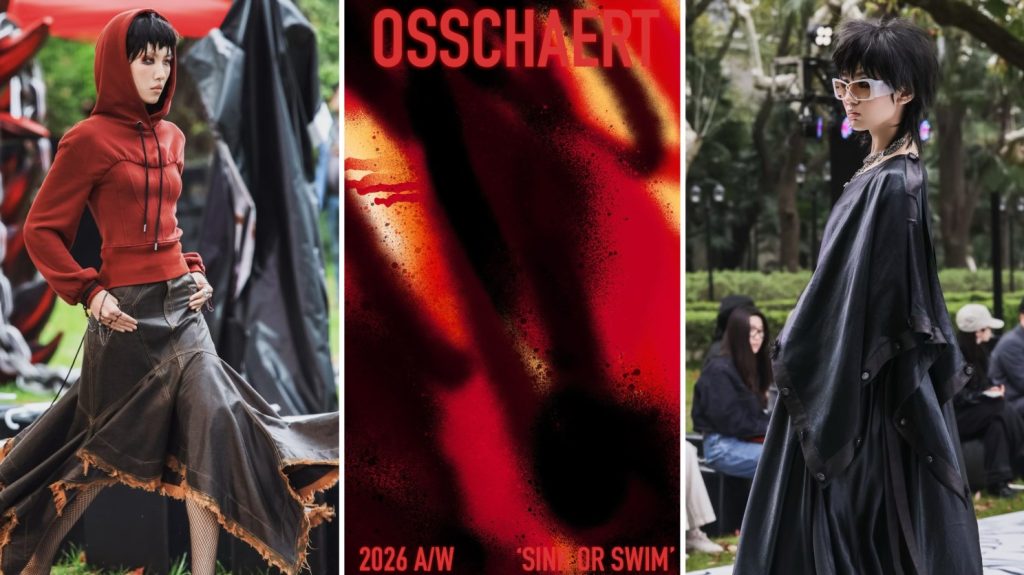
This is not European design traveling to China. This is Chinese designers who absorbed the Antwerp philosophy — its rigor, its conceptual depth, its independence from trend cycles — and are now bringing it back to their home market. On their own terms. With their own voice.
That is a genuinely new kind of exchange. And watching it happen at the Belgian Consulate, in a historic villa on one of Shanghai’s most atmospheric streets, gave the moment an almost symbolic weight.
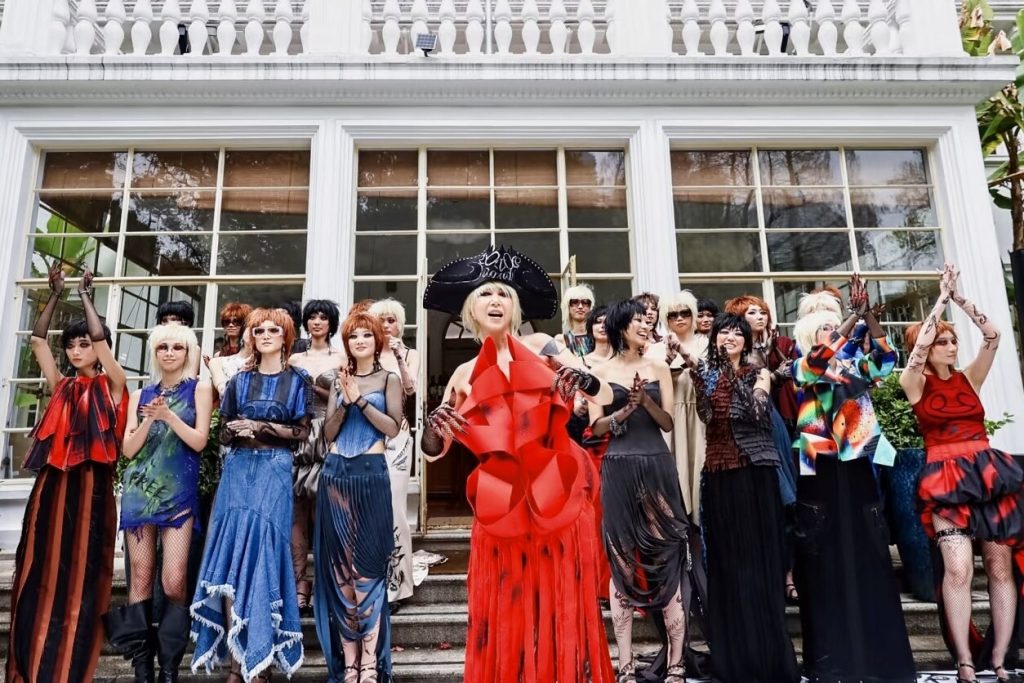
The venue was not accidental. The Belgian Consulate General is not a neutral space. It carries cultural meaning — a physical marker of origin, of the educational system that shaped these designers, of a design tradition that travels not just through products but through people. Choosing that setting for a debut show communicates something that no conventional runway venue can replicate.
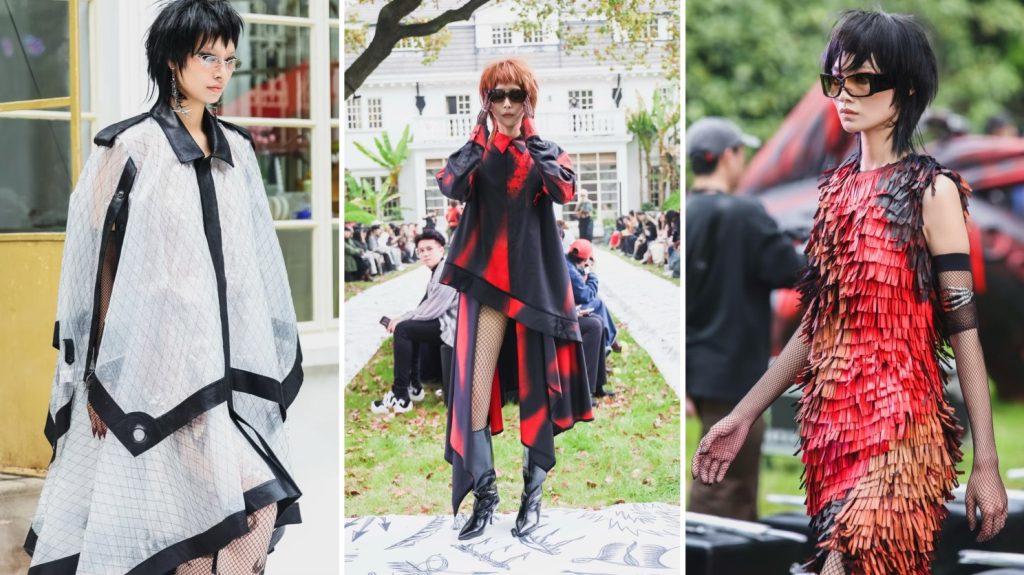
What the setting does that the collection alone cannot
There is a difference between presenting work and framing it.
A hotel ballroom or exhibition hall introduces a product. The Consulate introduced a world — the story behind the garments, the education behind the thinking, the cultural exchange that produced both.
For a young brand making its first appearance in the Chinese market, that frame matters enormously. Shanghai Fashion Week is dense. Attention is competitive. What makes a debut memorable is not always the collection itself, but whether the audience leaves with a clear sense of what the brand stands for and where it comes from.
Why this model is worth paying attention to
As we continue building MMUUZZ’s approach to introducing brands to China, the OSSCHAERT debut reinforced something we think about a lot.
The Chinese market — particularly the design-aware, platform-native audience that engages deeply with fashion — is increasingly receptive to brands with genuine depth. Not depth as a marketing claim, but depth as something visible in the construction, the narrative, the choices a brand makes about how and where it shows up.
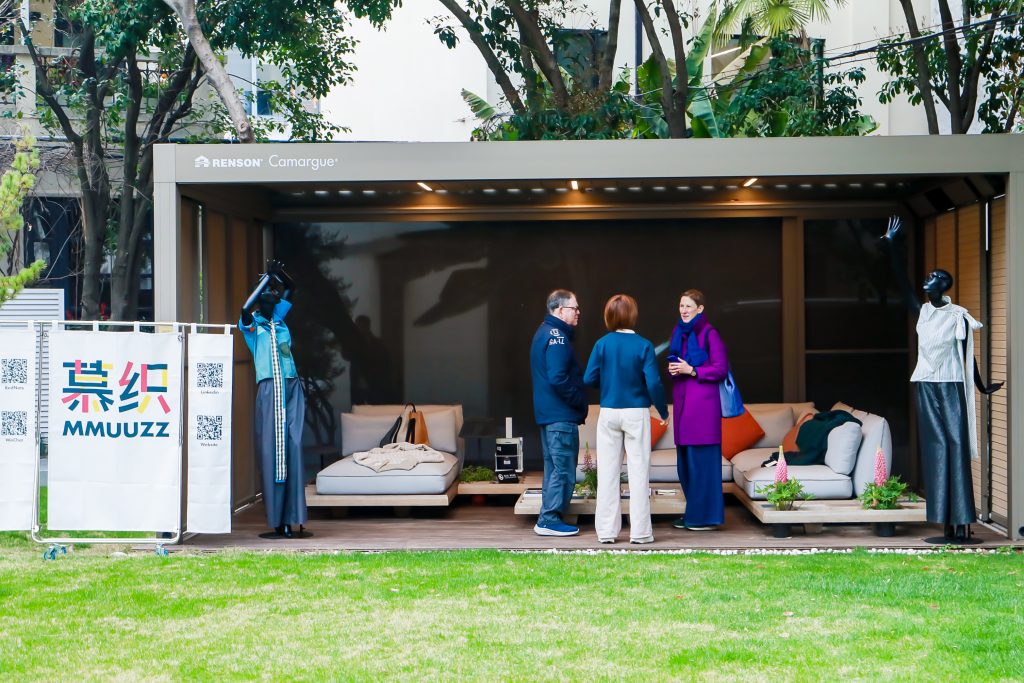
For the brands we work with — rooted in European craft traditions and design-led thinking — the question of how they enter this market is as important as whether they enter it.
The Consulate model is one expression of that thinking. It says: this brand exists within a cultural system worth understanding. It arrives with context already in place.
Not every brand needs a runway. Not every brand needs a consulate garden. But every brand entering this market needs a frame — a clear answer to the question of why it belongs here and what it carries that nothing else can.
OSSCHAERT answered that question on March 30 in a way that will be difficult to forget.